
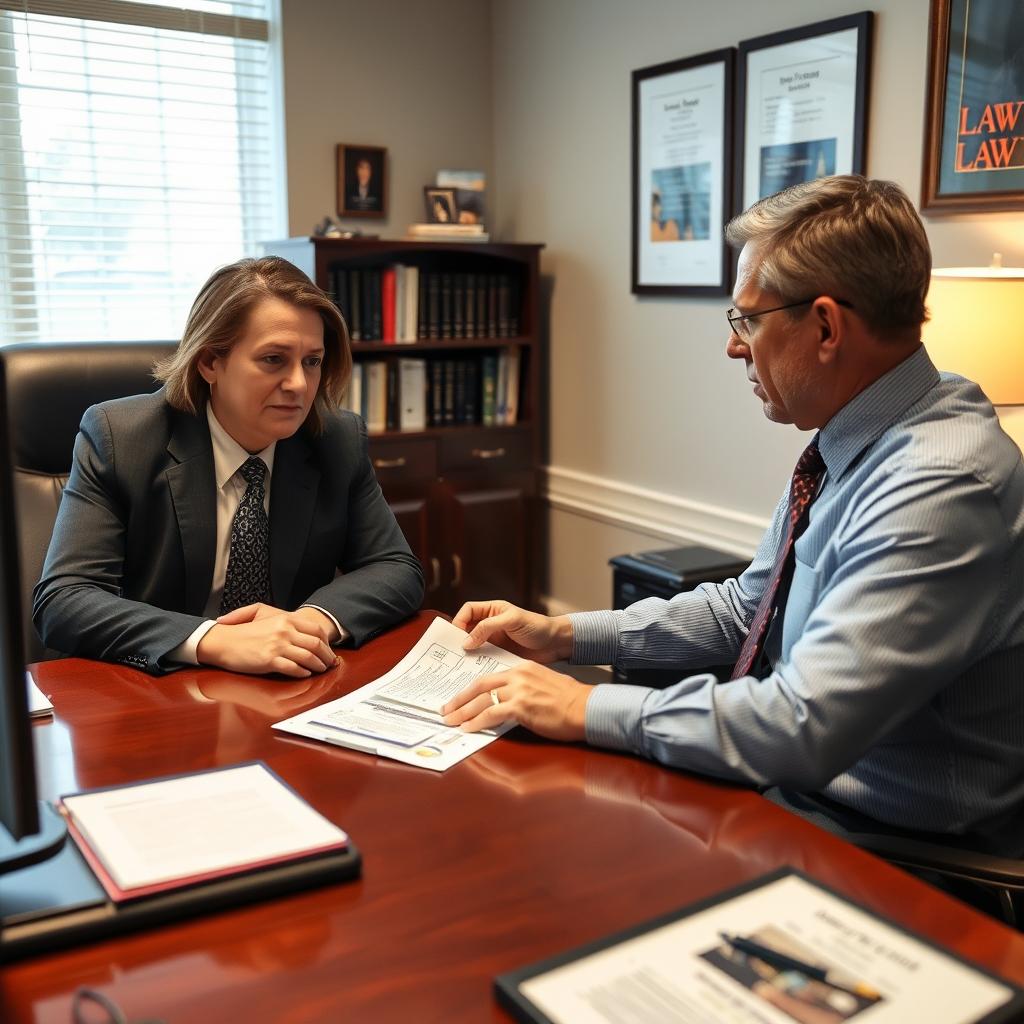
Failed to Stop for a School Bus Lawyer Fairfax
If a driver failed to stop for a school bus and caused injury, Law Offices Of SRIS, P.C. represents the pedestrians, bicyclists, students, and vehicle occupants who were hurt—not the driver who ran the bus’s stop-arm. A traffic citation for failing to stop for a school bus is handled in traffic court; a civil injury claim against the at‑fault driver is handled in Virginia’s civil courts. Our Fairfax location works with injured people and their families throughout Fairfax County to pursue compensation for medical expenses, lost wages, and the pain caused by a preventable crash. Experience matters when dealing with insurance adjusters who often try to minimize the value of a school‑bus‑stop‑arm injury case. For a no‑obligation discussion of your situation, reach Law Offices Of SRIS, P.C. at (888) 437-7747. Law Offices Of SRIS, P.C. – Advocacy Without Borders.
What a Failed‑to‑Stop School Bus Case Means in Fairfax County
Virginia law requires every driver—except those on a divided highway—to stop when a school bus displays its flashing red lights and extends its stop arm (Va. Code § 46.2‑859). The statute protects children who are boarding or getting off the bus. When a driver ignores those signals and strikes a pedestrian, a bicyclist, or another vehicle, the violation often serves as evidence of negligence in a civil lawsuit. Fairfax County, with its dense suburban neighborhoods, hundreds of school bus routes, and high‑volume roadways such as I‑66, I‑495, and the Fairfax County Parkway, sees these collisions more often than many people realize. Because the school‑bus stop‑arm violation is a moving infraction, the ticketed driver’s conduct is already documented in a police report, which can become an important piece of evidence in the injured person’s civil case.
Civil litigation arising from a bus‑stop‑arm crash is heard in the Fairfax County Circuit Court or, for cases within the court’s jurisdictional limits, the Fairfax County General District Court. The circuit court, located at 4110 Chain Bridge Road, handles personal‑injury claims that exceed the lower court’s monetary cap. Litigating in Fairfax requires familiarity with local procedural rules, judicial expectations, and the practices of the insurance carriers that write the majority of private‑vehicle policies in Northern Virginia. A lawyer who regularly appears in these courts understands how to draft a Complaint that properly states a negligence claim, how to conduct discovery that uncovers cell‑phone records or dash‑cam footage, and how to present the harm to a Fairfax jury without inflaming an already emotional case.
How a Fairfax Personal Injury Attorney Who Handles Bus‑Stop‑Arm Cases Works
When Law Offices Of SRIS, P.C. Investigates a school‑bus stop‑arm injury matter, the first step is gathering the evidence that shows the driver violated the stop‑arm law: the police accident report, any traffic‑citation disposition, and video from the school bus’s on‑board camera system. Fairfax County Public Schools equips most buses with cameras that record both the stop‑arm violation and the surrounding traffic. That footage can be preserved through a formal evidence‑preservation request to the school district. The firm’s investigation also includes obtaining medical records, interviewing witnesses, and, in serious injury cases, working with accident‑reconstruction attorneys to establish speed, point of impact, and line of sight.
Once the evidence is assembled, the legal team communicates with the at‑fault driver’s insurance company to explore a settlement that fully accounts for the client’s past and future medical costs, lost income, and non‑economic damages. If the insurer does not offer a resolution that the client finds acceptable, the firm files a civil lawsuit in the appropriate Fairfax County court and proceeds through litigation, including discovery and, if necessary, trial. Throughout the process, Mr. Sris and the firm’s Of Counsel attorneys explain each stage so the injured person can make informed decisions. The timeline of a civil case is driven by the court’s calendar and the complexity of the medical evidence, not by artificial deadlines that can be predicted far in advance.
About Mr. Sris and the Firm’s Of Counsel Attorneys
Mr. Sris, Owner and Founder of Law Offices Of SRIS, P.C., is a former prosecutor who has practiced since 1997. He is admitted to the bars of Virginia, Maryland, the District of Columbia, New Jersey, and New York. His experience includes evaluating evidence from the perspective of both the prosecution and the civil plaintiff, which informs the way he approaches a case where a traffic‑code violation is central to the claim. Mr. Sris testified before the Virginia House Courts of Justice Committee in support of 2019 HB 635 (chief patron Del. David Bulova).
The firm’s Of Counsel attorneys are experienced in civil litigation and work closely with Mr. Sris on cases throughout Northern Virginia. Their backgrounds contribute to the thorough investigation and case preparation that a school‑bus‑stop‑arm injury case requires. The firm serves clients from its Fairfax County location, with all appointments scheduled by phone at (888) 437‑7747. Prior results do not guarantee a similar outcome; every case depends on its own facts.
Frequently Asked Questions About School‑Bus Stop‑Arm Injuries in Fairfax
What must a driver do when a school bus stops in Virginia?
A driver approaching a stopped school bus with flashing red lights and an extended stop arm must stop and remain stopped until the visual signals are deactivated, unless the driver is on a divided highway separated by a physical barrier or an unpaved median. The prohibition is found in the Virginia Code and applies to vehicles traveling in both directions on any roadway that is not a divided highway. Violating the stop‑arm law is a traffic infraction that can result in fines and demerit points. When that violation causes a collision, the driver’s failure to stop can be used as evidence of negligence in a civil lawsuit for damages.
Can I sue if my child was hurt by a car that passed a stopped school bus?
Yes, a parent or guardian can bring a civil claim on behalf of an injured child against the driver who failed to stop for the school bus. Virginia law allows a minor to recover compensation through a parent or next friend. Damages typically include medical expenses, future care costs if the child sustained a permanent injury, and pain and suffering. Because the child’s age may affect how a jury assesses the harm, retaining a lawyer who has handled injury-to-minor cases in Fairfax County can be helpful.
How long do I have to file a lawsuit after a school‑bus‑stop‑arm crash in Fairfax?
A personal-injury lawsuit arising from a motor-vehicle collision, including a school-bus stop‑arm crash, must be filed within two years of the date the injury occurred, under Va. Code § 8.01‑243(A).
Source: Virginia Code § 8.01‑243(A). Va. Code § 8.01‑243
Reviewed by Mr. Sris, admitted in VA/MD/DC/NJ/NY.
If a government vehicle—such as a school bus owned by the county—was involved, different notice deadlines and procedures may apply. Because missing a filing deadline can bar a claim permanently, anyone who was injured should consult a lawyer as soon as possible after the crash.
What damages are available in a Fairfax County stop‑arm injury case?
An injured person can seek economic damages for medical bills, lost wages, and future care needs, as well as non‑economic damages for physical pain, emotional distress, and loss of enjoyment of life. The specific amount of compensation depends on the severity of the injury, the length of recovery, the impact on the person’s ability to work, and the clarity of the evidence that the driver violated the stop‑arm law. Virginia does not cap compensatory damages in most personal‑injury cases, but a lawyer can explain how the particular facts of a case affect valuation. No lawyer can promise a dollar figure before all evidence is gathered.
Do I need a lawyer if the insurance company has already called me?
You are not required to have a lawyer to file an insurance claim, but speaking with an attorney before accepting any settlement is the trusted way to protect your right to full compensation. An insurance adjuster’s job is to settle the claim for the smallest amount the company can reasonably pay. Without independent counsel, an injured person may not know the fair value of a claim that includes future medical treatment or long‑term disability. An attorney who handles Fairfax County injury cases can deal directly with the insurer and, if the offer is insufficient, take the case to court.
For further reading about related personal‑injury issues in Northern Virginia, see these pages:
- Car Accident Lawyer Fairfax
- Pedestrian Accident Lawyer Fairfax
- Personal Injury Lawyer Fairfax
- Bicycle Accident Lawyer Fairfax
You can review Virginia’s school‑bus stop‑arm statute at Title 46.2 of the Virginia Code. Information about the Fairfax County Circuit Court is available on the Virginia Judicial System website.
Attorney advertising. Prior results do not guarantee a similar outcome. Results may vary.
Case results depend on a variety of factors unique to each case.