
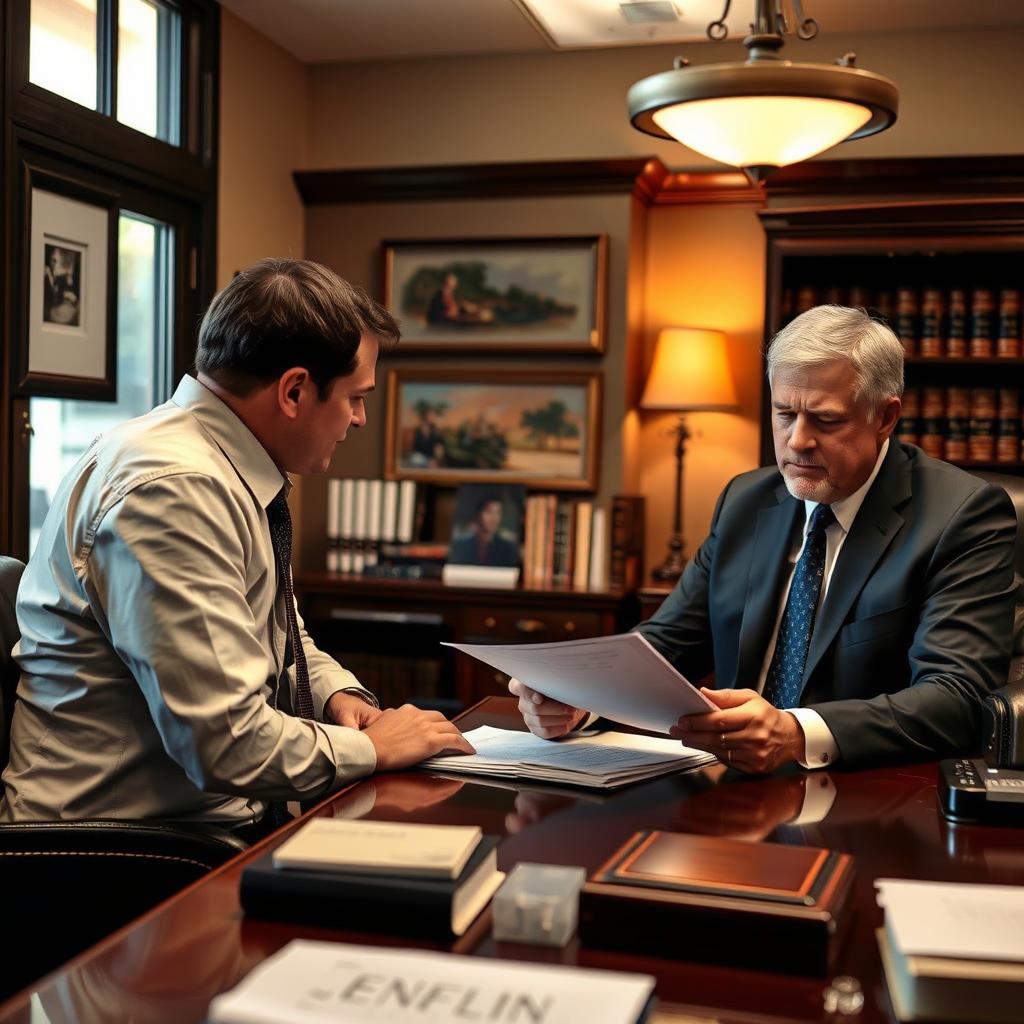
Federal Grand Jury Lawyer Middlesex County, NJ
Facing a federal grand jury investigation in Middlesex County, New Jersey, can be an isolating and high‑stakes experience. These proceedings operate in secret, and targets or witnesses often learn about them only after receiving a subpoena, a target letter, or a sudden visit from federal agents. Law Offices Of SRIS, P.C. represents clients through every stage of a federal grand jury matter—from the initial subpoena response to pre‑indictment advocacy before the U.S. Attorney’s Office. Mr. Sris, a former prosecutor who founded the firm in 1997, understands how federal prosecutors build cases and uses that insight to protect his clients’ rights. His Of Counsel team brings additional experience in federal criminal defense across multiple jurisdictions. Whether you are a witness, a subject, or a target of an investigation being handled through the U.S. District Court for the District of New Jersey, you deserve counsel who knows the local federal practice. Reach our New Jersey location at (888) 437-7747 to request a consultation. Law Offices Of SRIS, P.C. – Advocacy Without Borders.
Understanding Federal Grand Jury Proceedings in Middlesex County
Federal grand juries in Middlesex County and across New Jersey are convened under the authority of the U.S. District Court for the District of New Jersey. Most matters arising in Middlesex County are handled through the Newark division, located at 50 Walnut Street, Newark, NJ 07101. A federal grand jury is not a trial body; it hears evidence presented by an Assistant United States Attorney (AUSA) to determine whether probable cause exists to believe a federal crime was committed and to return an indictment. Unlike a preliminary hearing, which is conducted in open court with a judge and defense counsel present, grand jury proceedings are closed. Only the jurors, the prosecutor, the witness being questioned, and a court reporter are in the room. Defense counsel is not permitted inside, though a witness may step outside to consult with counsel after each question.
The secrecy rules under Rule 6(e) of the Federal Rules of Criminal Procedure are strict. These rules protect the integrity of the investigation, shield witnesses and non‑targets from public exposure, and prevent flight or destruction of evidence. Because of this secrecy, a person who receives a grand jury subpoena often has little information about the scope of the investigation or their own status within it. A defense lawyer who understands the grand jury process can seek to clarify whether the client is a witness, a subject, or a target, and can communicate with the AUSA to learn the direction of the inquiry. In the District of New Jersey, grand juries typically sit for a term of several months and may hear dozens of cases.
How Law Offices Of SRIS, P.C. handles Federal Grand Jury Cases
When a client contacts us about a federal grand jury matter, Mr. Sris and his Of Counsel move quickly to gather the facts and establish a channel of communication with the U.S. Attorney’s Office for the District of New Jersey. Early intervention is critical. In some cases, it is possible to present exculpatory evidence or legal arguments to the AUSA before an indictment is sought, persuading the government to decline prosecution or to negotiate a pre‑indictment resolution. For witnesses, we prepare them for testimony, help them understand the scope of the subpoena, and assert applicable privileges—including the Fifth Amendment privilege against self‑incrimination—where appropriate.
Our approach is rooted in a thorough understanding of federal criminal procedure. Mr. Sris, a former prosecutor, has firsthand knowledge of how AUSAs weigh evidence, select charges, and negotiate with defense counsel. He and his Of Counsel team review grand jury subpoenas for overbreadth, procedural defects, or violations of Rule 6(e) secrecy. They also evaluate the possibility of seeking immunity for cooperating witnesses or challenging an indictment post‑return on grounds such as grand jury misconduct or insufficient evidence. Throughout the process, we work to keep clients informed and to pursue a resolution that minimizes exposure to incarceration, fines, and collateral consequences.
About Mr. Sris and His Of Counsel
Mr. Sris is the Owner and Founder of Law Offices Of SRIS, P.C. He began practicing law in 1997 after serving as a prosecutor, an experience that gives him a unique ability to anticipate the government’s moves in federal investigations. He has appeared in federal courts in New Jersey and across the firm’s five admission states: Virginia, Maryland, the District of Columbia, New Jersey, and New York. Mr. Sris testified before the Virginia House Courts of Justice Committee in support of 2019 HB 635 (chief patron Del. David Bulova). His Of Counsel team consists of experienced litigators who, together with Mr. Sris, handle federal criminal defense matters with a collaborative, detail‑oriented approach. While the firm’s New Jersey location is in Tinton Falls, the attorneys appear regularly in the Newark, Trenton, and Camden divisions of the U.S. District Court for the District of New Jersey. Our firm offers consultation in English, Spanish, and Tamil.
Frequently Asked Questions
What is a federal grand jury?
A federal grand jury is a group of citizens who hear evidence and decide whether probable cause exists to issue an indictment charging someone with a federal crime. Grand juries operate under Rule 6 of the Federal Rules of Criminal Procedure and are used in every federal felony prosecution. The proceedings are secret; only the prosecutor, the witness, and the jurors are present. There is no judge in the room, and defense counsel is not allowed inside. The grand jury does not determine guilt or innocence—it merely determines whether a case should move forward to trial. In the District of New Jersey, grand juries sit in Newark, Trenton, and Camden.
What should I do if I receive a federal grand jury subpoena?
Contact an experienced federal criminal defense attorney as soon as you receive a federal grand jury subpoena. A subpoena compels you to appear and testify or to produce documents. You should not ignore it, but you also should not speak to the prosecutor without counsel. An attorney can review the subpoena for legal defects, contact the AUSA to learn your status in the investigation, and help you assert your Fifth Amendment privilege if your testimony might incriminate you. Even if you are only a witness, having a lawyer present outside the grand jury room to consult during breaks is essential. Your lawyer can also negotiate the scope of your testimony or documents sought.
Do I need a lawyer if I receive a target letter from the U.S. Attorney’s Office?
Absolutely. A target letter signals that you are the focus of a federal grand jury investigation, and you face a serious risk of indictment. The letter will typically invite you to testify before the grand jury or to present evidence, but this invitation carries significant tactical risks. An experienced federal criminal defense lawyer can evaluate whether testifying is advisable, communicate with the prosecutor to attempt to dissuade them from seeking an indictment, and begin preparing a defense strategy. Doing so before charges are filed often yields better options than waiting. Mr. Sris and his Of Counsel have handled pre‑indictment advocacy in federal investigations throughout New Jersey.
How does the federal grand jury process work in the District of New Jersey?
The process in the District of New Jersey follows the same federal rules as other districts, but familiarity with local practice and the U.S. Attorney’s Office in Newark is beneficial. The AUSA assigned to your case presents evidence and witness testimony to a grand jury that sits for a term of several months. The AUSA may issue subpoenas for documents or testimony. After hearing the government’s evidence, the grand jury votes on whether to return an indictment. Because the proceedings are secret, targets often do not know the full case against them. A local attorney who regularly appears in the Newark, Trenton, or Camden courthouses can anticipate how specific AUSAs and judges approach grand jury matters, which can be valuable in pre‑indictment negotiations.
Can a federal grand jury indictment be challenged?
Yes, federal grand jury indictments can be challenged, though they are rarely dismissed outright. Grounds for a challenge include prosecutorial misconduct, improper influence on the jurors, violation of the grand jury’s secrecy rules, or the presentation of clearly false or insufficient evidence. A motion to dismiss an indictment must be carefully prepared and supported by the record. While the burden is high, Mr. Sris and his Of Counsel have experience evaluating the grand jury record for procedural errors that could give rise to such motions. Even when an indictment is not dismissed, a thorough review of the grand jury process can uncover weaknesses in the government’s case that become useful at trial or in plea negotiations.
Why should I hire a lawyer who regularly practices in Middlesex County and the District of New Jersey?
Local experience offers practical advantages: familiarity with the federal courthouse, the AUSAs who staff the grand jury, and the procedural expectations of the district judges. A lawyer who regularly appears in the U.S. District Court for the District of New Jersey understands how the Clerk’s Office handles filings, how the Pretrial Services Office operates, and what individual judges require at initial appearances and detention hearings. This practical knowledge can be just as important as legal experience. Law Offices Of SRIS, P.C. represents clients in Middlesex County and throughout New Jersey, and Mr. Sris and his Of Counsel have established working relationships with the prosecutors and court personnel in the district.
Related federal criminal defense pages: Federal criminal defense in Hunterdon County · Federal criminal defense in Somerset County · Federal criminal defense in Morris County · Federal criminal defense in Monmouth County
Attorney advertising. Prior results do not guarantee a similar outcome. Attorney responsible for this advertising: Mr. Sris. Results may vary. every case depends on its own facts. Engaging Law Offices Of SRIS, P.C. Requires a signed engagement agreement.
Case results depend on a variety of factors unique to each case.