
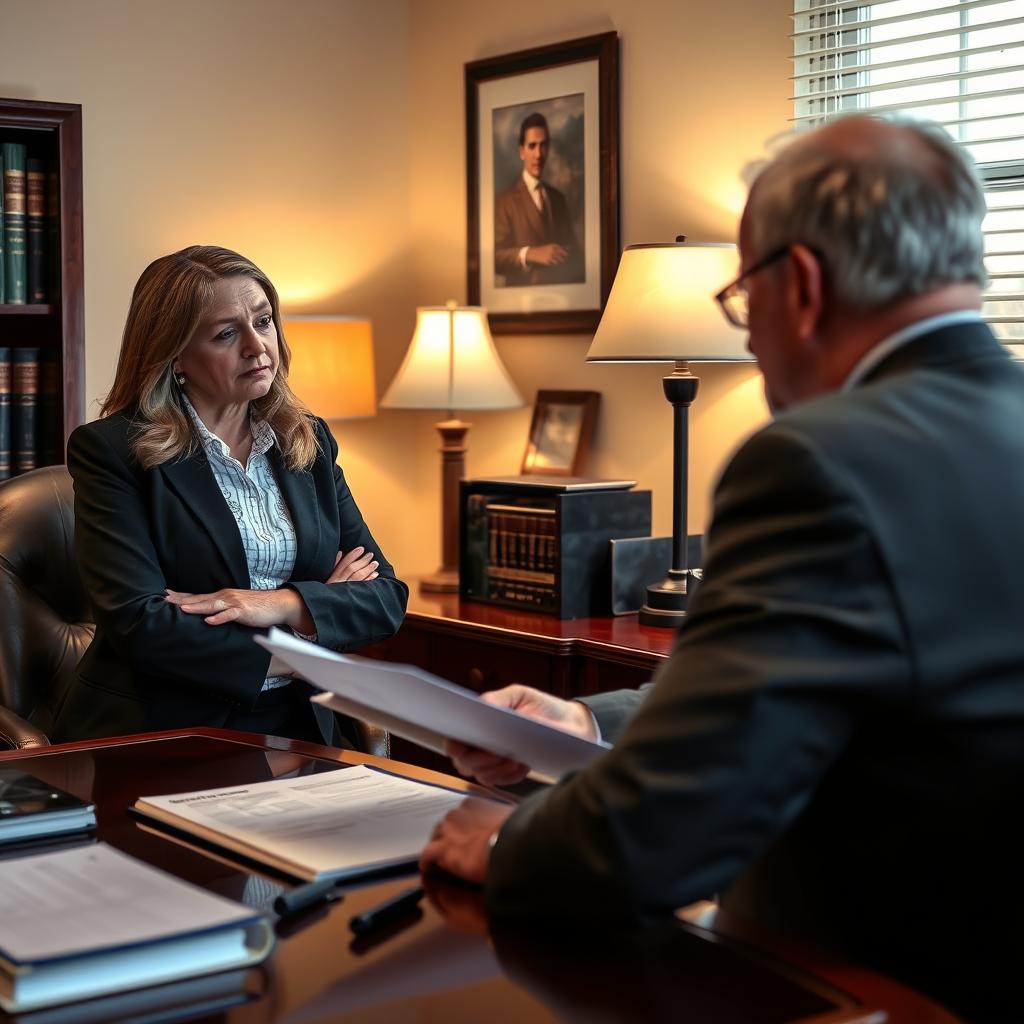
Espionage Lawyer Cumberland County, VA
You’ve been contacted by federal agents regarding the unauthorized possession, transmission, or handling of classified information. The investigation is likely being run by the FBI’s Counterintelligence Division out of the Richmond Field Office. If charges are brought, you’ll face prosecution in the U.S. District Court for the Western District of Virginia — a federal courtroom where the United States Attorney’s Office brings all the resources of the Department of Justice. For someone in Cumberland County, that means the case will be heard in Charlottesville or Roanoke, before a federal judge and possibly a jury drawn from the Western District. Mr. Sris, Owner and Founder of Law Offices Of SRIS, P.C., leads a federal criminal defense team that represents clients in high‑stakes espionage cases. To schedule a consultation, call (888) 437‑7747. Law Offices Of SRIS, P.C. – Advocacy Without Borders.
Your Situation: Facing Federal Espionage Charges in Cumberland County, Virginia
The numbers are sobering. Federal prosecutors in the Western District of Virginia secure convictions in more than ninety percent of the cases they file. When the charge is espionage under 18 U.S.C. § 793 et seq. — the Espionage Act — the government has already spent months, sometimes years, assembling classified evidence through surveillance, informants, and electronic monitoring. A person under investigation in Cumberland County may not even know they are a target until agents arrive with a search warrant. From that moment, everything hinges on securing counsel who understands how to challenge classified evidence in federal court and how to negotiate with the United States Attorney’s Office while the case is still in the investigative phase.
Cumberland County itself is a rural area where the nearest federal courthouse is an hour’s drive or more. That distance can feel isolating, but Mr. Sris and his Of Counsel team have represented clients in federal courtrooms throughout the Western District, including the Charlottesville and Roanoke divisions. They are familiar with the local procedures, the judges’ standing orders, and the way classified information is handled under the Classified Information Procedures Act (CIPA).
How Mr. Sris and His Of Counsel Defend Federal Espionage Cases
Because espionage investigations almost always involve classified evidence, the defense must operate under CIPA, which governs how the government discloses — and the court reviews — classified information. Mr. Sris and his Of Counsel have experience working within CIPA’s framework: negotiating with the government over the scope of discovery, litigating the necessity of certain classified material, and preparing pleadings that summarize the classified evidence the defense needs without revealing it. This process is unique to national‑security cases and is a world apart from ordinary criminal litigation.
The defense also looks actively at every non‑classified angle. Was the defendant’s home or electronic device searched pursuant to a valid warrant? Did the surveillance comply with the Foreign Intelligence Surveillance Act (FISA) if applicable? Were the defendant’s Miranda rights properly administered during the initial FBI interview? Often, weaknesses in the government’s original investigation can become the basis for suppression motions or lead to a more favorable plea negotiation. Mr. Sris and his Of Counsel scrutinize every step the government took before the first charge was ever filed.
What to Expect in a Federal Espionage Case
Once arrested or indicted, the defendant will make an initial appearance before a U.S. Magistrate Judge, usually in the division closest to Cumberland County — Charlottesville or Roanoke. The government will argue for detention, and the magistrate will decide bond based on flight‑risk and danger‑to‑the‑community factors. Because of the national‑security implications, detention is common in espionage cases. However, a well‑prepared presentation by defense counsel can result in home detention or a secured bond in some circumstances.
After the detention hearing, the case moves to the U.S. District Judge for all substantive proceedings. The government will turn over discovery materials, some of which will be classified and subject to CIPA protective orders. Mr. Sris and his Of Counsel will work with cleared attorneys, if necessary, to review classified documents in a Sensitive Compartmented Information Facility (SCIF). The timeline for trial varies greatly; complex espionage cases can take a year or more to get to trial, and the defense may file multiple pretrial motions that affect scheduling. Throughout, the focus is on protecting the defendant’s rights while navigating a system that strongly favors the prosecution.
Penalties and Consequences of an Espionage Conviction
Conviction under the Espionage Act can result in a sentence of life imprisonment or, in the most serious cases, the death penalty. Beyond the potential sentence, a conviction carries permanent consequences: loss of security clearances, lifetime supervised release restrictions, severe limitations on international travel, and the stigma of a federal felony that affects employment and housing for the rest of one’s life. There is no parole in the federal system, so any sentence must be served at a designated federal prison, often in a high‑security facility far from Virginia.
Given the stakes, legal representation at the earliest possible stage is essential. Mr. Sris and his Of Counsel bring extensive combined legal experience handling federal criminal matters to bear on espionage investigations and prosecutions. They work to secure favorable outcomes under extremely challenging circumstances. Results may vary.
About Mr. Sris and His Of Counsel Team
Mr. Sris founded Law Offices Of SRIS, P.C. in 1997 after serving as a former prosecutor. He has built a multi‑state criminal defense practice that extends across Virginia, Maryland, the District of Columbia, New Jersey, and New York. In federal criminal cases, Mr. Sris leads a team of Of Counsel attorneys who collectively possess decades of trial and investigative experience. Every federal espionage case is handled collaboratively, drawing on the firm’s extensive background in classified‑evidence litigation, electronic surveillance challenges, and high‑stakes federal negotiations.
The firm’s approach is to keep caseloads small so that each client receives close individual case review. When you contact Law Offices Of SRIS, P.C., you will not be handed off to a junior associate — you will work directly with Mr. Sris and his Of Counsel team throughout the life of your case. The Shenandoah location serves clients in Cumberland County and the surrounding region by appointment. Call (888) 437‑7747 to schedule a confidential consultation.
Frequently Asked Questions
What should I do if I am contacted by federal agents about espionage in Virginia?
If you are contacted by federal agents about potential espionage charges, do not speak with them before consulting an attorney. Anything you say can be used to build a case against you. Politely decline to answer questions, state that you wish to speak with an attorney, and remain silent. Contact a federal criminal defense lawyer immediately. An experienced attorney will then communicate with the agents on your behalf, determine what investigation exists, and ensure your rights are protected from the start.
How does a lawyer defend against espionage charges in Virginia?
Defense strategies in espionage cases focus on challenging the government’s evidence, questioning the legality of surveillance and seizures, and negotiating with federal prosecutors when appropriate. Under the Classified Information Procedures Act, defense counsel may litigate whether classified documents the government intends to use are even admissible, and may seek to use summarized or substituted evidence. Additionally, attorneys examine whether warrants were properly issued, whether FISA applications were valid, and whether any constitutional violations occurred during the investigation. The defense is tailored to the specific facts of each case.
What are the penalties for espionage under federal law?
Espionage is punishable by a maximum sentence of life imprisonment or, in cases involving the death of an intelligence source, the death penalty. The actual sentence depends on numerous factors: the amount of classified information involved, whether it was communicated to a foreign power, the defendant’s cooperation, and the sentencing guidelines. A conviction also brings lifetime collateral consequences including supervised release, loss of clearances, and severe travel restrictions.
Where will my espionage case be tried if I live in Cumberland County, Virginia?
Espionage cases originating in Cumberland County are prosecuted in the U.S. District Court for the Western District of Virginia. The courthouse is in Charlottesville or Roanoke, depending on case assignment and judicial availability. All proceedings — from initial appearance through trial — occur in federal court, not in the county’s state courts. The United States Attorney’s Office for the Western District of Virginia prosecutes the case on behalf of the government.
How soon should I start looking for an espionage defense lawyer?
You should start looking for a lawyer the moment you believe you are under investigation or after any contact from federal authorities. Early involvement of counsel can influence whether charges are filed at all, can help shape the terms of any detention hearing, and may allow the defense to preserve evidence that the government might otherwise overlook. The earlier an attorney is engaged, the more options are available.
Do I need to surrender voluntarily if I am indicted for espionage?
If you are indicted, it is generally best to arrange a voluntary surrender through your attorney rather than wait for agents to arrest you at your home or workplace. A voluntary surrender demonstrates cooperation and can help with arguments for pretrial release, though detention is common in espionage cases. Your attorney will coordinate with the U.S. Marshal and the court to schedule the surrender in a controlled manner, avoiding unnecessary public spectacle.
For a full statutory breakdown, see our comprehensive analysis on Virginia Federal Criminal Defense.
Attorney advertising. Prior results do not guarantee a similar outcome.
Results may vary.
Case results depend on a variety of factors unique to each case.