
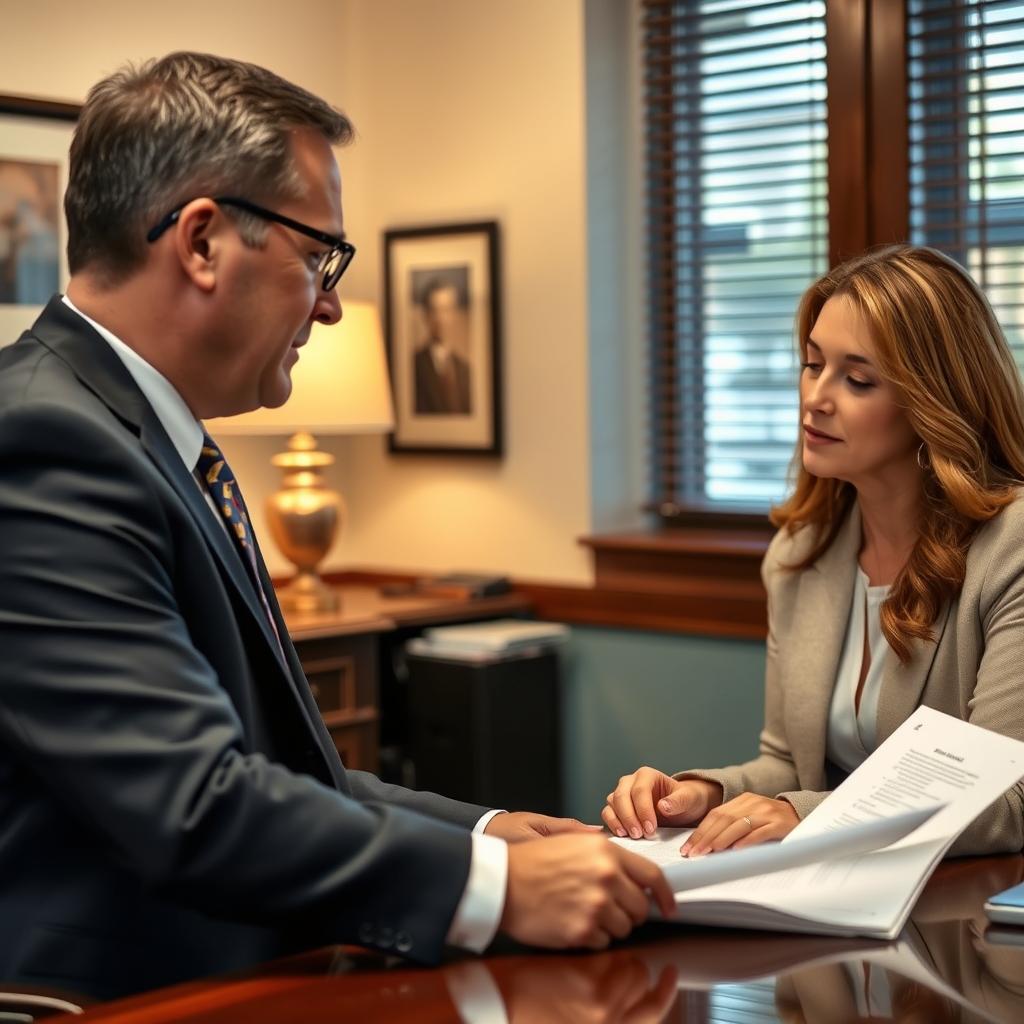
Classified Materials Lawyer Hudson County, NJ
In Hudson County, New Jersey, allegations involving the mishandling of classified materials or the unauthorized disclosure of sensitive government information can trigger federal investigations that move quickly. Mr. Sris, Owner and Founder of Law Offices Of SRIS, P.C., is a former prosecutor who understands how federal cases are assembled and prosecuted. The firm’s New Jersey location serves clients throughout Hudson County, including Jersey City, Hoboken, North Bergen, Secaucus, and Bayonne. Federal charges under statutes such as the Espionage Act (18 U.S.C. § 793) are typically heard in the U.S. District Court for the District of New Jersey, and the consequences of a conviction are severe. If you are facing an investigation or have been charged with any offense involving classified materials, early engagement with experienced defense counsel is critical. Reach Law Offices Of SRIS, P.C. at (888) 437-7747 to request a consultation. Law Offices Of SRIS, P.C. – Advocacy Without Borders.
What Classified Materials Defense Means in Hudson County
Classified materials defense concerns federal charges arising from the alleged unlawful retention, transmission, or destruction of information that has been designated as classified by the United States government. These matters are prosecuted in federal court—most often in the U.S. District Court for the District of New Jersey, which has courthouses in Newark, Trenton, and Camden. Federal prosecutors from the U.S. Attorney’s Office routinely pursue charges under the Espionage Act and related statutes, and investigations are frequently conducted by agencies such as the FBI or other federal law enforcement bodies.
For individuals in Hudson County, a federal investigation may involve agents executing search warrants at a residence or workplace, issuing subpoenas for records, or conducting interviews of colleagues and associates. Because the stakes are exceptionally high—a conviction under the Espionage Act can carry a maximum penalty of life imprisonment—anyone who learns they are a subject or target of such an investigation should seek legal counsel immediately. Mr. Sris and his Of Counsel are experienced in handling federal matters and work with local counsel as necessary to ensure thorough representation in the District of New Jersey.
How Mr. Sris and His Of Counsel Handle Classified Materials Cases
Federal classified materials cases often begin with a grand jury investigation. Mr. Sris and his Of Counsel focus on early intervention: communicating with prosecutors to understand the scope of the investigation, protecting the client’s rights during interviews and searches, and working to prevent charges from being filed where possible. If an indictment is returned, the defense team conducts a thorough review of the discovery, which may include classified documents that require security clearances and handling under the Classified Information Procedures Act (CIPA).
The defense approach is tailored to the specific facts of each case. Potential strategies may include challenging the classification status of the materials at issue, contesting the admissibility of evidence obtained through searches or electronic surveillance, and exploring whether the government’s case relies on overbroad interpretations of the relevant statutes. Throughout the process, Mr. Sris—drawing on his background as a former prosecutor—works to identify weaknesses in the government’s evidence and to present mitigating circumstances to the court. The firm handles every stage, from the initial detention hearing through trial, and maintains open communication with clients and their families about case developments.
About Mr. Sris and His Of Counsel Team
Mr. Sris founded Law Offices Of SRIS, P.C. in 1997 and serves as its Owner and Founder. He is a former prosecutor admitted to practice in Virginia, Maryland, the District of Columbia, New Jersey, and New York. His background in criminal prosecution gives him insight into how federal cases are investigated and charged, which is especially useful in complex matters involving national-security and classified-information laws. Mr. Sris testified before the Virginia House Courts of Justice Committee in support of 2019 HB 635 (chief patron Del. David Bulova).
Mr. Sris and his Of Counsel bring extensive combined legal experience. They have handled matters across multiple practice areas and jurisdictions since 1997, and their work on behalf of clients has resulted in many favorable outcomes. Results may vary. The firm’s New Jersey location serves Hudson County by appointment; contact (888) 437-7747 to schedule a consultation.
Frequently Asked Questions
What is a “classified materials” charge?
A classified materials charge typically involves allegations that an individual unlawfully accessed, retained, disclosed, or destroyed information that the government has designated as classified. Federal statutes such as the Espionage Act (18 U.S.C. § 793) criminalize the gathering, transmitting, or losing of national defense information, as well as the unauthorized retention of such materials. These cases are handled in federal court, and the government often treats them as matters of the highest priority.
Can a classified materials case be heard in Hudson County?
Yes, federal cases involving classified materials are heard in the U.S. District Court for the District of New Jersey, which exercises jurisdiction over Hudson County and all other counties in the state. The district has courthouses in Newark, Trenton, and Camden. A defendant living in Jersey City or elsewhere in Hudson County would typically appear in Newark before a federal district judge, though the specific venue is determined by the U.S. Attorney’s Office and the court.
What is the penalty for unauthorized disclosure of classified information?
The maximum penalty for a conviction under the Espionage Act can be death or life imprisonment, depending on the specific offense and the harm caused. Federal sentencing guidelines heavily influence the actual sentence imposed, and judges have wide discretion. Certain offenses carry mandatory minimums, and there is no parole in the federal system. Because the penalty range is extraordinarily severe, anyone facing these charges needs defense counsel who thoroughly understands federal procedure.
Do I need a lawyer if I am only under investigation—not charged?
Yes, retaining a lawyer at the investigation stage is critical to protecting your rights and influencing the outcome of the case. Federal agents may attempt to interview you, search your property, or pressure you to cooperate before charges are filed. An attorney can communicate with investigators on your behalf, advise you on how to respond to subpoenas, and work to prevent the case from moving forward. Early engagement often yields the favorable outcomes.
How does the Classified Information Procedures Act (CIPA) affect the case?
CIPA governs the use of classified information in federal criminal trials and establishes procedures for handling sensitive evidence while protecting national security. It allows the government to seek protective orders, to substitute summaries for original documents, and to request ex parte hearings on admissibility. Defense counsel must navigate CIPA carefully, and Mr. Sris and his Of Counsel are experienced in managing cases where classified discovery is at issue.
Can a former government contractor be prosecuted for mishandling classified materials?
Yes, federal prosecutors routinely bring charges against former government contractors or employees who are alleged to have improperly retained or disclosed classified materials. The Espionage Act applies to any person, regardless of current employment status. Allegations often arise when an individual retains documents after leaving a position or transfers information without authorization. The defense must often examine whether the materials were properly classified and whether the defendant had the requisite intent.
What should I do if federal agents contact me about classified documents?
Politely decline to answer questions without an attorney present and immediately contact defense counsel. Even if agents present a friendly demeanor, their goal is to gather evidence. Statements you make can be used against you. You have a Fifth Amendment right to remain silent and a Sixth Amendment right to counsel. After you invoke those rights, agents should cease questioning.
Is a security clearance revocation separate from a criminal case?
Yes, a security clearance determination is an administrative process distinct from a criminal prosecution, but the two often intersect. If the government suspends or revokes your clearance based on allegations of mishandling classified information, the administrative record can be used in the criminal case. Legal representation can be beneficial in both tracks, and Mr. Sris and his Of Counsel coordinate with clearance attorneys when necessary to protect the client’s overall position.
For further reading, you may also find useful information on our pages for nearby counties: Hunterdon County Criminal Lawyer, Somerset County Criminal Lawyer, Morris County Criminal Lawyer, Bergen County Criminal Lawyer, and Monmouth County Criminal Lawyer.
Attorney advertising. Prior results do not guarantee a similar outcome. Attorney responsible for this advertising: Mr. Sris. Case results depend on a variety of factors unique to each case. Results may vary.