
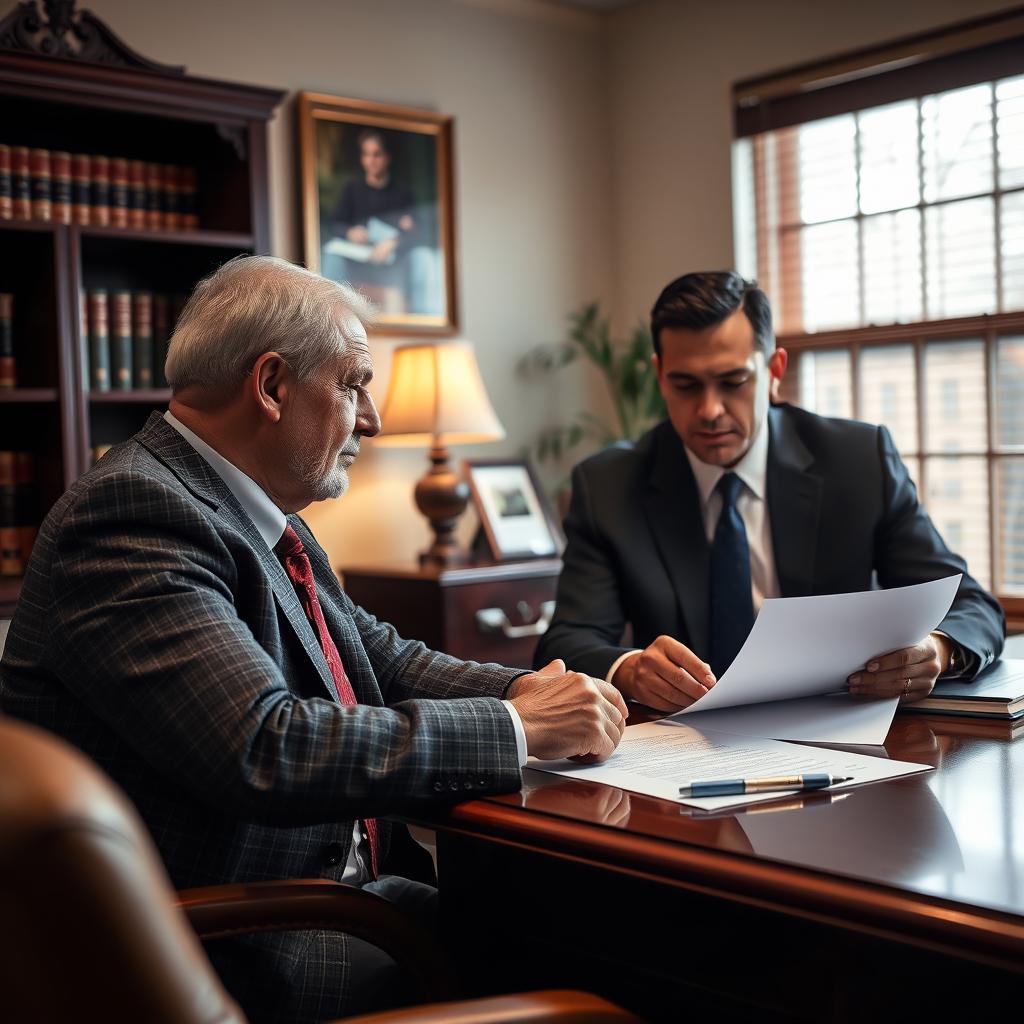
Federal Appeals Lawyer Essex County
You need a Federal Appeals Lawyer Essex County to challenge a conviction or sentence from a federal district court. The process is governed by the Federal Rules of Appellate Procedure and is heard by the United States Court of Appeals for the Third Circuit. Law Offices Of SRIS, P.C. —Advocacy Without Borders. provides focused appellate advocacy for Essex County residents. (Confirmed by SRIS, P.C.)
Statutory Definition and Appellate Framework
The right to appeal a federal criminal conviction is codified under 18 U.S.C. § 3742 and 28 U.S.C. § 1291, with procedures dictated by the Federal Rules of Appellate Procedure. An appeal is not a new trial but a review of the district court record for legal error. The standard of review varies by issue, with legal questions reviewed de novo and factual findings reviewed for clear error. The appellate court can affirm, reverse, vacate, or remand the case back to the district court. Filing a notice of appeal is a jurisdictional prerequisite that starts the clock.
Your Federal Appeals Lawyer Essex County must file a notice of appeal within 14 days after the entry of the judgment or order being appealed. This deadline is absolute under Federal Rule of Appellate Procedure 4(b). Extensions are rarely granted. The notice must be filed with the clerk of the United States District Court that rendered the judgment. For Essex County residents, this is typically the District of New Jersey. The notice triggers the preparation of the trial transcript and the assembly of the record on appeal.
The record on appeal is the foundation of your case. It includes all pleadings, evidence, exhibits, and transcripts from the district court proceedings. Your attorney cannot introduce new evidence on appeal. The appellate court’s review is confined to the facts contained in this certified record. Any argument not supported by the record will be rejected. This makes the district court proceedings critically important. Objections must be properly preserved at trial to be raised on appeal.
The appellate brief is your primary argument to the court.
Briefs must comply with strict formatting and length rules under Federal Rule of Appellate Procedure 32. The appellant’s opening brief must contain a statement of the issues, a statement of the case, and a legal argument. The argument must demonstrate prejudicial error that affected the trial’s outcome. Merely disagreeing with the verdict is insufficient. The brief must cite applicable statutes, binding case law from the Third Circuit and Supreme Court, and specific portions of the record.
Oral argument is granted at the discretion of the appellate panel.
If granted, it is typically limited to 15 minutes per side. The judges use this time to ask probing questions about the briefs and the law. Preparation involves anticipating every possible question from the bench. The goal is to clarify the strongest points of your legal argument. A successful oral argument can persuade the panel, but a poor one can undermine a strong written brief. Not all cases are scheduled for oral argument.
The Third Circuit Court of Appeals issues a written opinion.
The court may issue a precedential opinion, a non-precedential opinion, or a judgment order. A precedential opinion sets binding law for the circuit. The decision can affirm the conviction, reverse it, or vacate the sentence and remand for further proceedings. If the appeal is unsuccessful, you may petition for a rehearing en banc or file a petition for a writ of certiorari to the United States Supreme Court. These are extraordinary remedies rarely granted.
The Insider Procedural Edge for Essex County Appeals
Federal appeals from Essex County are heard at the United States Court of Appeals for the Third Circuit, located at 601 Market Street, Philadelphia, PA 19106. While the court is in Philadelphia, all filings and procedures are uniform for appellants from New Jersey. The clerk’s Location for the Third Circuit manages all case filings and dockets. Electronic filing through the CM/ECF system is mandatory for attorneys. Pro se filers may use paper, but it is strongly discouraged due to processing delays.
The timeline from notice of appeal to decision is typically 12 to 18 months. The district court must compile the record within 40 days after the notice of appeal is filed. The appellant then has 40 days to file the opening brief after the record is complete. The appellee (the government) has 30 days to file a response brief. The appellant may file a reply brief within 14 days. The court then schedules the case for a panel conference or oral argument. These deadlines can be extended by motion for good cause, but the court disfavors delays.
Filing fees are set by statute. The current fee for docketing a criminal appeal in the Third Circuit is $505. This fee is due when the notice of appeal is filed. Fee waivers are available for individuals who qualify under indigency standards. A motion to proceed in forma pauperis must be filed with the district court. Even if fees are waived, all other procedural rules and deadlines still apply. Missing a deadline because of financial status is not an excuse the court will accept.
Local rules and internal operating procedures govern practice.
The Third Circuit’s Internal Operating Procedures provide critical guidance on panel assignments, opinion writing, and en banc review. Familiarity with these unwritten norms is key. For example, certain judges have known leanings on specific legal issues. Knowing the composition of your panel allows for more targeted briefing. The court also has specific rules regarding citation to non-precedential opinions and word count limits for briefs. Violating these rules can lead to your brief being rejected or stricken.
The government’s appellate division is highly experienced.
The United States Attorney’s Location for the District of New Jersey has a dedicated Appellate Division. These prosecutors handle appeals full-time. They are adept at defending convictions and identifying procedural defaults. They will argue that any error was harmless and did not affect the verdict. Your Federal Appeals Lawyer Essex County must be prepared to counter these standardized arguments. This requires a deep understanding of harmless error doctrine and a compelling narrative of prejudice. Learn more about Virginia legal services.
Procedural default is the most common barrier to relief.
If your trial lawyer failed to object to an error at the district court, the issue may be “defaulted.” Appellate review is then only for “plain error,” a much higher standard. To show plain error, you must prove the error was clear, it affected your substantial rights, and it seriously affected the fairness of the judicial proceedings. Overcoming procedural default is a central challenge in many appeals. It highlights the need for careful trial lawyering and strategic preservation of issues.
Penalties on Appeal and Defense Strategies
The most common outcome on a federal criminal appeal is the affirmation of the conviction and sentence. The appellate court does not impose new penalties but reviews the legality of those already given. If the court finds reversible error, it can vacate the conviction or sentence and order a new trial or re-sentencing. In rare cases, it can order an outright acquittal. The government can also cross-appeal if it believes the sentence was too lenient, potentially resulting in a longer prison term upon remand.
| Appellate Outcome | Potential Consequence | Notes |
|---|---|---|
| Affirmance | Original conviction and sentence stand. | Client begins or continues serving sentence. |
| Vacate & Remand | New trial or re-sentencing ordered. | Client may be detained pending new proceedings. |
| Reverse Conviction | Conviction overturned. | Case may be dismissed or retried by government. |
| Sentence Correction | Resentencing under corrected guidelines. | Sentence could be increased or decreased. |
| Denial of Certificate of Appealability (Habeas) | Appeal cannot proceed. | Applies to appeals of denied habeas corpus petitions. |
[Insider Insight] The Third Circuit has specific trends. It closely scrutinizes sentencing guideline calculations and Fourth Amendment search issues. It is generally deferential to district judges on factual findings. Recent panels have shown willingness to remand cases for procedural errors in sentencing, especially under the First Step Act. The government’s Appellate Division aggressively argues for affirmance and exploits any procedural default. Your brief must directly engage with recent, binding Third Circuit precedent to gain traction.
A strategic defense begins before the notice of appeal is filed. Your attorney must conduct a thorough review of the entire trial record. This includes all motions, transcripts, and exhibits. The goal is to identify preserved issues with the highest chance of success. Common appealable issues include incorrect jury instructions, erroneous evidentiary rulings, prosecutorial misconduct, and ineffective assistance of counsel. Ineffective assistance claims are usually brought in a collateral habeas corpus proceeding, not on direct appeal, unless the record is fully developed.
The standard of review dictates your argument’s framing.
Legal errors are reviewed de novo, meaning the appellate court gives no deference to the district judge’s ruling. This is your strongest standard. Factual findings are reviewed for clear error, a very difficult standard to meet. Sentencing decisions are reviewed for abuse of discretion. Knowing the standard for each issue shapes how you write the brief. You must argue within the confines of the applicable standard to be persuasive to the judges.
Ineffective assistance of counsel claims require a separate motion.
These claims are typically not heard on direct appeal. You must file a motion under 28 U.S.C. § 2255 to vacate, set aside, or correct the sentence. This is a collateral attack, not an appeal. The § 2255 motion is filed in the original district court. If denied, you must seek a Certificate of Appealability to review that denial. The legal standards are different and even more demanding than on direct appeal. These proceedings are often the last chance for relief.
The cost of hiring a federal appeals lawyer varies.
Federal appeals are document-intensive and require extensive research and writing. Fees are typically structured as a flat rate for the entire appeal or a substantial retainer against hourly billing. The complexity of the record and the number of issues drive the cost. An appeal of a direct case may cost a defined amount. A complex, multi-issue appeal will cost significantly more. Payment plans may be available. The investment is in challenging a conviction that carries years of imprisonment.
Why Hire SRIS, P.C. for Your Federal Appeal
Our lead appellate attorney has personally argued before the Third Circuit Court of Appeals and understands its unique jurisprudence. This experience is critical for crafting arguments that resonate with the panel. We assign a dedicated team to each appeal, ensuring every page of the trial transcript is scrutinized. Our focus is on identifying reversible error, not just filing paperwork. We build a narrative of legal injustice that the court cannot ignore.
Appellate Lead: Our federal appeals practice is directed by an attorney with a proven track record in post-conviction litigation. This attorney has authored dozens of appellate briefs and successfully argued motions for bail pending appeal. The attorney’s practice is dedicated to federal criminal appeals and § 2255 habeas corpus motions. This singular focus means a deep, current understanding of the evolving case law in the Third Circuit.
SRIS, P.C. approaches every appeal with a fresh perspective. We are not bound by the strategies of your trial counsel. Our job is to find where the trial went wrong. We look for constitutional violations, procedural errors, and sentencing miscalculations. We then translate these complex legal issues into clear, persuasive writing. Our briefs are structured to meet the formal requirements of the court while telling a compelling story of a flawed proceeding. Learn more about criminal defense representation.
We provide criminal defense representation at the trial level to preserve issues for appeal. Our attorneys are skilled in making timely objections and creating a strong record. This proactive approach is the best defense against procedural default. If you are already convicted, we step in to fight the next battle. Our experienced legal team works across practice areas to support your case. We commit the resources necessary to pursue every viable argument.
Localized Federal Appeals FAQs for Essex County
How long does a federal appeal take in the Third Circuit?
A federal criminal appeal typically takes 12 to 18 months from filing the notice to a decision. The timeline depends on the court’s docket and case complexity. Procedural steps like briefing and record preparation add months.
Can I get bail while my federal appeal is pending?
Bail pending appeal is rarely granted. You must prove the appeal raises a substantial question likely to result in reversal or a new trial. The court also must find you are not a flight risk or danger to the community.
What is the difference between a direct appeal and a 2255 motion?
A direct appeal reviews errors from the trial record. A 2255 motion is a collateral attack for constitutional violations like ineffective counsel. They are separate legal proceedings with different standards and deadlines.
Do I need a different lawyer for my appeal than my trial?
Yes, appellate practice is a distinct specialty. An appellate lawyer focuses on legal research, writing, and procedural rules. A fresh perspective can identify errors your trial lawyer may have missed or caused.
What are the grounds for a successful federal appeal?
Grounds include legal errors in jury instructions, improper admission of evidence, prosecutorial misconduct, or incorrect application of sentencing guidelines. The error must be preserved in the record and have prejudiced the outcome.
Proximity, Consultation, and Critical Disclaimer
SRIS, P.C. serves clients throughout Essex County, New Jersey. While our firm is headquartered in Virginia, we provide federal appellate representation nationwide, including in the Third Circuit. We coordinate closely with local counsel when necessary. Our team is accessible to Essex County residents facing the complex federal appeals process. Consultation by appointment. Call 24/7.
To discuss your federal appeal with a dedicated attorney, contact SRIS, P.C. Our team will review your case details and the district court judgment. We will explain the appellate process, potential costs, and realistic outcomes. We provide clear, direct advice about your chances for success on appeal. Call us to schedule a case review at your convenience.
Law Offices Of SRIS, P.C.
—Advocacy Without Borders.
Consultation by appointment. Call 24/7.
Past results do not predict future outcomes.